When your water heater in Bullhead City starts taking an eternity to deliver hot water, it's more than an inconvenience; it often signals an underlying issue that needs prompt attention. In a desert climate like ours, especially with the hard water conditions prevalent along the Colorado River, sediment buildup is a common culprit. This sediment, composed of minerals like calcium and magnesium, settles at the bottom of the tank, creating an insulating layer that prevents the heating elements or gas burner from efficiently transferring heat to the water. This not only slows down heating but also forces your unit to work harder, increasing energy consumption and potentially shortening its lifespan. We regularly see this in older homes throughout Riviera and even some of the newer builds in Historic Downtown Bullhead City.
Beyond sediment, several other factors can contribute to sluggish water heating. For electric water heaters, a failing heating element is a frequent cause. These elements can burn out or become coated with mineral deposits, losing their ability to generate adequate heat. For gas water heaters, issues with the thermostat, thermocouple, or burner assembly can impede proper heating. Sometimes, the problem isn't with the heating mechanism itself but with an undersized unit struggling to meet demand, or even issues with the dip tube that brings cold water into the tank. Our technicians are adept at pinpointing these specific issues, understanding the unique challenges presented by Bullhead City's water quality and the various types of systems found across Mohave County.
Another often-overlooked factor, especially with the extreme temperature swings we experience in Bullhead City, is the efficiency of the unit and its insulation. While not directly causing slow heating, a poorly insulated tank or pipes can lead to significant heat loss, making it seem like the water is taking longer to heat. Furthermore, in homes with older plumbing systems, particularly those built decades ago, issues like partially closed shut-off valves or even pinhole leaks can impact water flow and pressure, indirectly affecting how quickly hot water reaches your fixtures. Our approach involves a comprehensive inspection, considering not just the water heater itself but also its integration within your home's entire hot water delivery system to ensure a lasting solution.
Technician insight
In Bullhead City, the thing that catches most people out with a water heater taking too long to heat is the sheer amount of mineral sediment that builds up in the tank. Our hard water from the Colorado River really accelerates this, especially in older homes in Riviera. Homeowners often think it's a major component failure, when a good flush can make a world of difference.
Slow Heating in a Historic Downtown Bullhead City Home
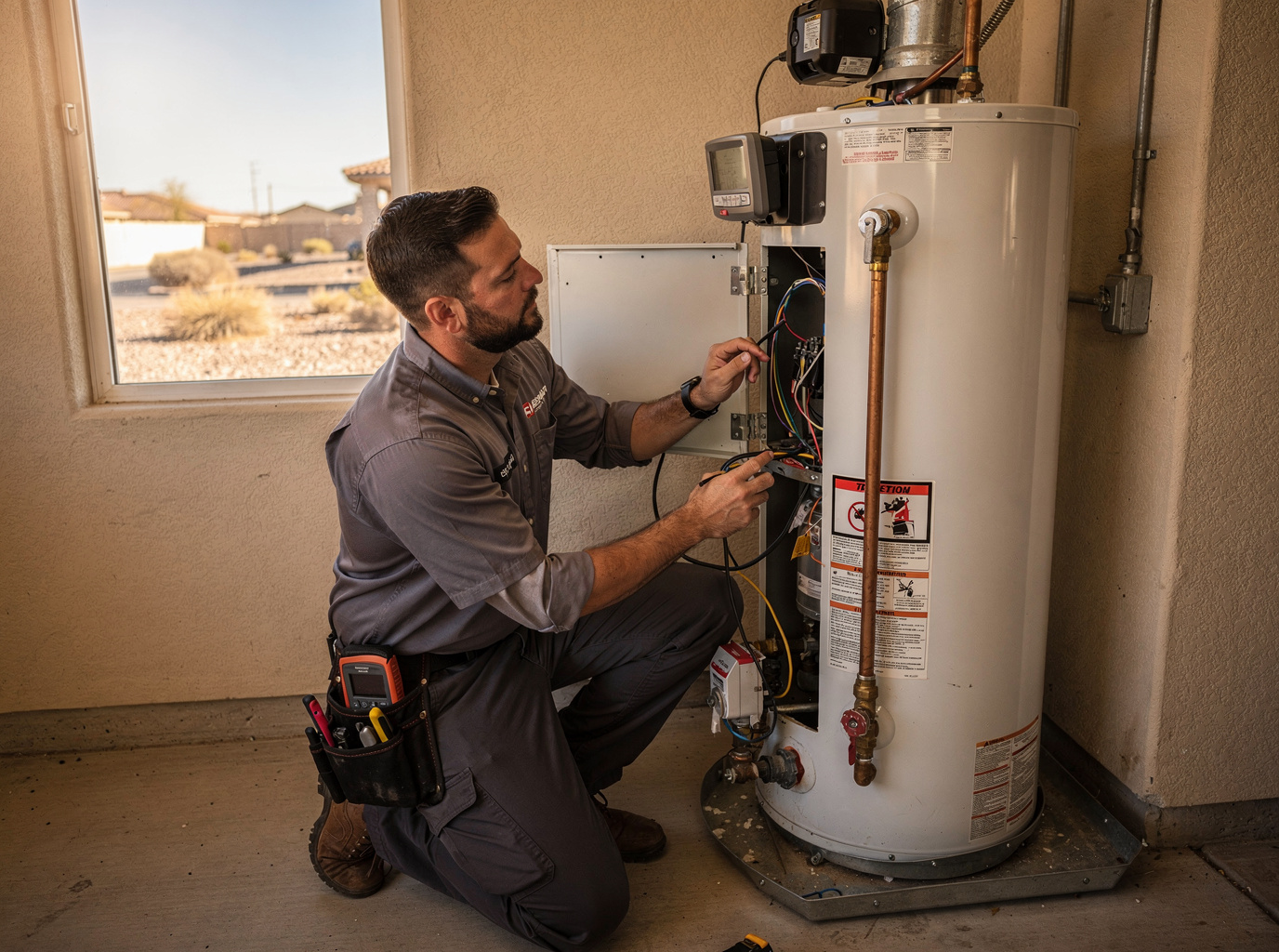
A homeowner in Historic Downtown Bullhead City called because their gas water heater was taking over an hour to produce hot water. We found significant sediment buildup at the bottom of the tank, effectively insulating the burner, and a partially clogged dip tube. We performed a thorough power flush to remove the sediment and replaced the dip tube, restoring efficient heating within the hour.
Water Heater Taking Too Long to Heat Services We Offer
✓Sediment Flush & Removal
Thorough flushing of your water heater tank to remove mineral sediment buildup common in Bullhead City's hard water, restoring heating efficiency and preventing element damage.
✓Electric Heating Element Replacement
Diagnosis and replacement of faulty or corroded electric heating elements, ensuring your electric water heater can properly heat water again.
✓Gas Burner & Thermocouple Service
Inspection and repair or replacement of gas burners, thermocouples, and pilot lights to resolve heating issues in gas-fired water heaters.
✓Thermostat Calibration & Replacement
Accurate calibration or replacement of malfunctioning thermostats to ensure your water heater maintains the correct temperature and heats efficiently.
✓Dip Tube Inspection & Repair
Checking and repairing or replacing a broken dip tube, which can cause cold and hot water to mix, leading to lukewarm water and slow heating.
✓Anode Rod Inspection & Replacement
Assessment and replacement of the anode rod to protect your tank from corrosion, which can indirectly affect heating efficiency over time.
Water Heater Taking Too Long to Heat Cost in Bullhead City, AZ
| Service | Typical Range | What Affects It |
|---|---|---|
| Sediment Flush & Water Heater Tune-Up | $180–$350 | Price depends on tank size and severity of buildup, common in Mohave County's hard water. |
| Electric Heating Element Replacement (per element) | $250–$450 | Includes parts and labor; most electric heaters have two elements. |
| Gas Thermocouple/Pilot Assembly Repair | $190–$380 | Cost varies based on specific part needed and accessibility within the unit. |
| Thermostat Replacement (electric or gas) | $280–$550 | Price depends on the type of thermostat and complexity of replacement. |
Ranges are typical for Bullhead City, AZ and confirmed with an exact written quote before any work starts.
How it works
- 1
Initial Diagnostic Assessment
Our technician will conduct a thorough inspection of your water heater and plumbing system, checking for common issues like sediment buildup, element failures, and thermostat malfunctions, considering Bullhead City's specific water conditions.
- 2
Pinpointing the Root Cause
Using specialized tools and expertise, we'll accurately identify why your water heater is taking too long to heat, whether it's an electrical component, gas assembly, or internal tank issue.
- 3
Clear Explanation & Solution
We'll explain our findings in plain language and provide a transparent, upfront quote for the necessary repairs, outlining the best course of action to restore efficient heating.
- 4
Expert Repair & Testing
Our skilled technicians will perform the agreed-upon repairs efficiently and effectively. We then test the system rigorously to ensure hot water is heating quickly and consistently before we leave.
Pricing
The cost for fixing a water heater that's taking too long to heat varies based on the specific issue, from a simple sediment flush to replacing major components.