2026-09-20 · Miguel Rodriguez
How To Drain And Flush A Water Heater At Home In Mohave County
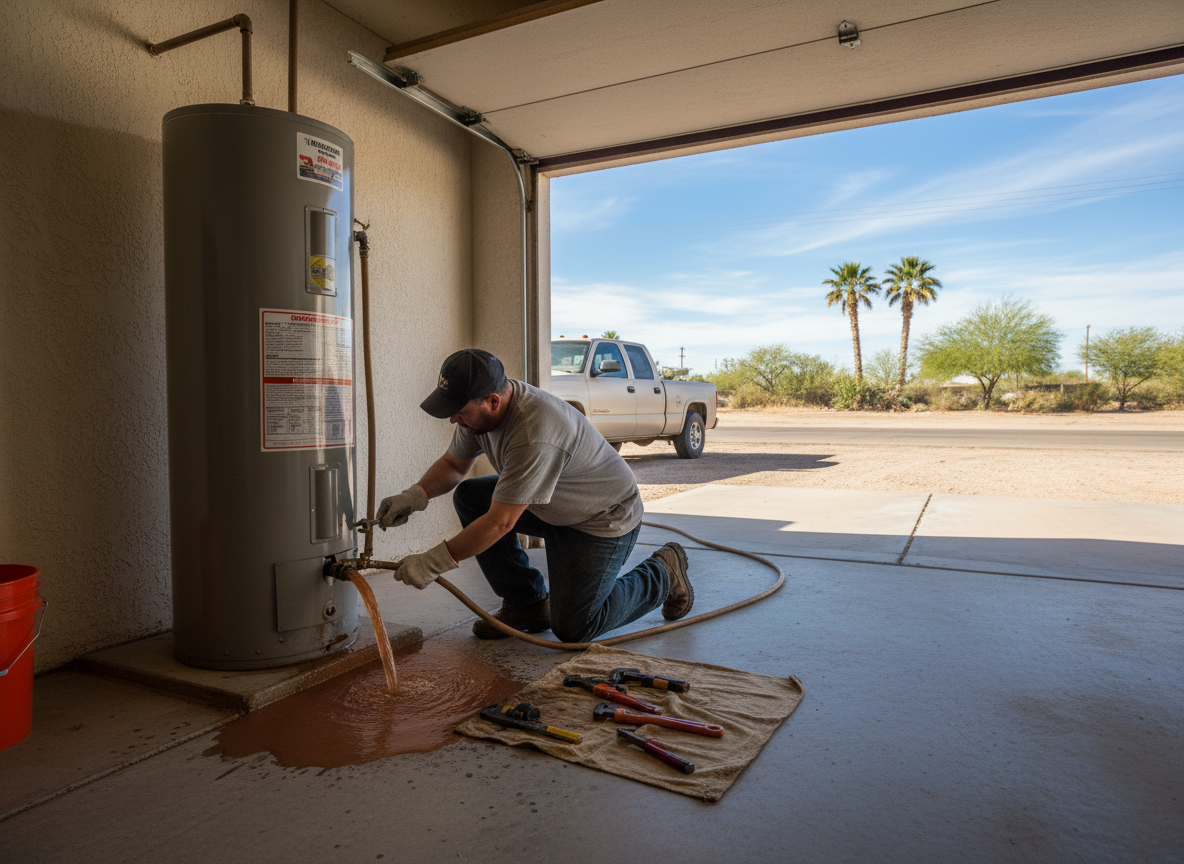
To drain and flush a water heater at home in Mohave County, you'll need to turn off the power or gas supply, shut off the cold water inlet, connect a hose to the drain valve, and open a hot water faucet to release pressure. This process, ideally performed annually, helps remove sediment buildup that can reduce efficiency and shorten your water heater's life, especially with the hard water often found along the Colorado River. While it might seem daunting, it's a manageable DIY task for most homeowners, taking about 1–2 hours once you have the right tools.
Why Flushing is Essential for Bullhead City Water Heaters
The hot desert climate along the Colorado River, including areas like Riviera and Historic Downtown Bullhead City, means our water heaters work overtime. The mineral content in our water, often referred to as 'hard water,' is a significant factor. Over time, these minerals, primarily calcium and magnesium, settle at the bottom of your water heater tank as sediment. This layer of sediment acts as an insulator, forcing your water heater to work harder and consume more energy to heat the water. This not only increases your utility bills but also accelerates wear and tear on the heating elements or burner assembly. Regular flushing removes this buildup, maintaining your unit's efficiency and preventing issues like the dreaded popping or rumbling noises often caused by sediment. For more on preventing such issues, consider reading about Water Heater Making Popping or Rumbling Noises.
Ignoring this maintenance can lead to premature failure of your water heater, sometimes years before its typical 8–12 year lifespan. In our region, where temperatures can soar, the last thing you want is a malfunctioning water heater, especially when you need reliable hot water for cleaning or even just a refreshing shower after a long day. Sediment buildup can also lead to <a href="/services/rusty-or-discolored-hot-water">rusty or discolored hot water</a> as the minerals corrode the inside of the tank. Proactive maintenance like flushing is key to longevity and consistent performance.
Tools You'll Need for the Job
Before you begin, gather all the necessary tools to ensure a smooth and efficient process. You don't want to be halfway through and realize you're missing something crucial. A standard garden hose is essential, preferably one that's long enough to reach an outdoor drain or a utility sink where you can safely discharge the water. You'll also need a bucket, particularly if you want to inspect the sediment as it drains out, and a flathead screwdriver or a socket wrench, depending on the type of drain valve your water heater has. Some newer units might have a plastic drain valve that can be opened by hand, while older models, common in some of the more established homes around Laughlin Bridge or near Bullhead City Community Park, often have brass valves requiring a tool. Having a pair of channel lock pliers can also be handy for stubborn valves.
It's also a good idea to have a few towels or rags on hand for any minor spills, and a flashlight can help you see clearly in dimly lit utility closets or basements where water heaters are often located. Safety glasses are also recommended to protect your eyes from any splashing water. While this is a DIY guide, if you ever feel uncomfortable or encounter issues like a drain valve that won't open, it's always best to call a professional. Bullhead City Water Heater Pros, located at 1127 Ramar Rd, Bullhead City, AZ 86442, USA, is open Mon–Fri 8am–6pm, Sat 9am–2pm, and can assist.
Step-by-Step Guide to Draining and Flushing
1. Turn Off the Power/Gas Supply: This is the most critical safety step. For an electric water heater, locate the circuit breaker in your electrical panel and switch it to the "OFF" position. For a gas water heater, turn the gas valve to the "OFF" position or set the thermostat to "VACATION" mode, which will stop the burner from firing. Never attempt to drain the tank with the heating element or burner active, as this can cause severe damage to the unit or even create a safety hazard.
2. Shut Off the Cold Water Inlet: Find the cold water supply valve, usually located at the top of the water heater on the right side. Turn this valve clockwise until it's completely closed. This prevents new cold water from entering the tank while you're draining it. Ensure it's fully closed to avoid continuous refilling.
3. Open a Hot Water Faucet: Go to any hot water faucet in your home (e.g., in a bathroom or kitchen sink) and turn it on. This will release any vacuum that forms as the tank drains and allows air to enter, ensuring the water flows out smoothly. Leave it open until the tank is fully drained.
4. Connect the Garden Hose: Attach your garden hose to the drain valve located at the bottom of the water heater. Make sure the connection is secure to prevent leaks. Direct the other end of the hose to a safe drainage area, such as a floor drain, a utility sink, or outside your home. Avoid draining hot water onto plants or areas where it could cause damage.